Herbal Lung Cleanse Guide: What Works in 2026
Quick Answer: What Is an Herbal Lung Cleanse?
An herbal lung cleanse is a daily routine of soothing, mucus-supporting botanicals — not a toxin flush. Your lungs already clean themselves, so herbs like mullein, cordyceps and quercetin simply support that natural clearance, helping calm irritated airways and thin mucus. Expect gradual comfort over four to eight weeks, never an overnight detox.
- Not a detox: no herb removes tar or "flushes" toxins — cilia and mucus do the real work.
- Best-evidenced herbs: mullein (saponins, mucilage), cordyceps (beta-glucans), quercetin (antioxidant flavonoid).
- Realistic window: four to eight weeks of consistent daily use, judged on airway comfort.
What an herbal lung cleanse really means
Type "lung detox cleanse" into a search bar and you will find roughly eighteen thousand people a month doing the same thing, most of them picturing something dramatic: a herbal potion that dissolves years of tar and leaves the lungs pink and new. It is a powerful image, and it is completely wrong. The honest version of an herbal lung cleanse is quieter and far more useful — a consistent daily routine of soothing, mucus-supporting botanicals that works with your body rather than pretending to override it.
Here is the fact that reframes everything: your lungs are already self-cleaning, and they are remarkably good at it. The airways are lined with millions of microscopic hair-like structures called cilia, and they sit under a thin, moving layer of mucus. Together they form what physiologists call the mucociliary escalator — a slow conveyor belt that traps dust, pollen, smoke particles and microbes and sweeps them steadily upward until you cough or swallow them away. You did not have to think about it once while reading this paragraph. It never stops.
So if the lungs clean themselves, what is a cleanse actually for? Support. Cilia beat more sluggishly when you are dehydrated, inflamed, or exposed to irritants. Mucus turns thick and stubborn when the airway lining is dry or aggravated. A well-chosen herbal blend can help on both fronts — thinning and mobilising mucus so the escalator runs smoothly, and coating and calming an irritated airway so it stops overproducing gunk in the first place. That is the entire honest premise. Nothing gets "flushed." The plumbing you already own simply gets a little help.
The herbs for a lung cleanse that actually have data
Most "lung cleanse" blends throw a dozen names at the label hoping one lands. Only a handful are worth the space. Below are the three with the most credible mechanism and the most-cited evidence in 2026, followed by the supporting cast.
Mullein: the soother with saponins and mucilage
Mullein leaf is the backbone of most respectable respiratory formulas, and for good reason. It is rich in mucilage — a gel-forming fibre that coats and calms the airway lining — and in saponins, plant compounds traditionally linked to loosening mucus. That combination is exactly what a real cleanse needs: something that soothes irritation while helping mucus move. In one frequently cited 60-day observation, roughly 81% of participants reported less coughing and about 77% described clearer, easier airways by the two-month mark. That is observational rather than a gold-standard trial, so read it as encouraging rather than definitive, but the mechanism and the tradition line up. For a deeper look at the plant itself, our breakdown of mullein leaf benefits for lungs walks through the saponin and mucilage research in more detail.
Cordyceps: beta-glucans and oxygen-use support
Cordyceps is the ingredient that separates a modern respiratory formula from a Victorian cough syrup. This medicinal mushroom contains beta-glucans and a compound called cordycepin, and it has been studied for endurance and the body's efficiency in using oxygen. That is a different job from mullein's soothing action — less about the airway surface, more about how well your system makes use of the air you take in. The research base is still maturing and much of it is small, so cordyceps belongs in the "promising, keep an eye on it" column. But as the second pillar of a cleanse, pairing airway comfort with oxygen-use support, it earns its place.
Quercetin: the antioxidant that calms the response to irritants
Quercetin is a flavonoid found in onions, apples and capers, and it has become one of the most-cited respiratory antioxidants of the last few years. Its appeal is that it helps steady the body's reaction to everyday airborne irritants — the pollen, dust and pollution that make sensitive airways feel tight and reactive. Think of quercetin as the third leg of the stool: mullein soothes the surface, cordyceps supports oxygen use, and quercetin helps keep the airway from overreacting to the outside world in the first place. It is a genuinely evidence-forward addition, not filler.
The supporting cast: marshmallow root, thyme and ginger
Beyond the big three, a few reliable herbs round out most respected blends. Marshmallow root is an even more mucilage-rich demulcent than mullein and doubles down on the soothing effect. Thyme is one of the better-studied traditional expectorants, thanks to its thymol content. Ginger contributes broad anti-inflammatory compounds. None of these is a headliner, but together they thicken the evidence base rather than dilute it. If you want the full comparison, our guide to the best herbs for respiratory health grades each one by mechanism and evidence strength.
Want the three best-evidenced cleanse herbs in one daily spray?
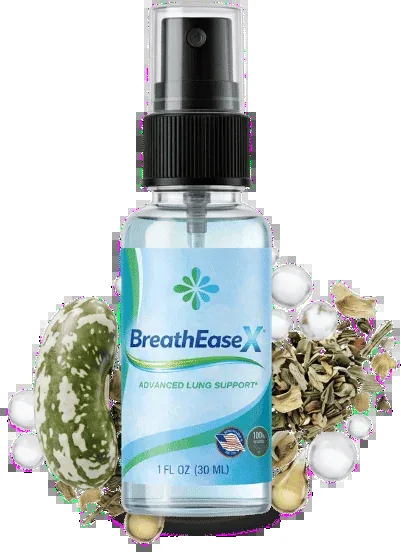
Breathe Ease X combines mullein, cordyceps and other lung-associated botanicals in a single oral spray — every ingredient and its evidence laid out, no proprietary-blend mystery.
See Breathe Ease X
The myth an herbal lung cleanse cannot deliver
Let us kill the biggest one plainly: no herb removes tar. Tar from smoking is a sticky tangle of solid particulates that becomes physically embedded deep in lung tissue, and there is no botanical, tea, drop or capsule that dissolves it and sends it out. When a product claims to "clean 30 years of tar in 30 days," that is not a supplement claim, it is a fantasy. The best a cleanse can do for a former smoker is support the natural clearance machinery so it works as well as it possibly can while the body does its slow repair on its own timeline.
The second myth is the toxin flush. Your liver and kidneys handle systemic detoxification; your lungs handle particles through the mucociliary escalator, not through some herbal "flush" that empties them like a drain. If a label leans hard on the words detox and flush, treat that as a marketing signal, not a scientific one. We unpack the wider pattern in our lung detox cleanse guide, which separates what the detox industry sells from what the airway can actually do.
The third myth is speed. Anything promising overnight results is misreading the biology. Cilia recovery and mucus normalisation play out over weeks, which brings us to the timeline that matters.
How long an herbal lung cleanse takes to work
Plan for four to eight weeks of daily, consistent use before you judge results. This is not a hedge — it is the timescale the underlying biology runs on. The airway lining renews itself gradually, cilia function shifts over weeks rather than hours, and mucus consistency responds to steady hydration and soothing support, not a single big dose. The 60-day mullein observation mentioned earlier is a useful anchor: the meaningful changes people noticed clustered around the two-month mark, not day three.
Consistency beats intensity every single time here. A moderate dose taken every day for six weeks will do far more than a megadose taken sporadically, because you are trying to maintain a supportive baseline rather than spike and crash. Set a simple daily trigger — with breakfast, or by the bathroom mirror — and treat the first eight weeks as the trial period. If you reach the end of a consistent eight weeks and genuinely notice nothing, that is real information: reassess the product, the dose, or whether a supplement is the right lever for your situation at all.
Evidence at a glance
| Herb | Main job in a cleanse | Evidence strength |
|---|---|---|
| Mullein | Soothes airway lining; supports mucus movement | Traditional plus one 60-day observation |
| Cordyceps | Supports oxygen use and endurance | Promising; studies still small |
| Quercetin | Antioxidant; calms response to irritants | Growing, evidence-forward |
| Marshmallow root | Demulcent (soothing coating) | Traditional; limited clinical data |
| Thyme | Traditional expectorant | Moderate; often studied in blends |
| Ginger | Anti-inflammatory support | Good but broad, not lung-specific |
How Breathe Ease X fits an honest cleanse routine
If you have read this far, the shopping filter is now obvious: you want the small number of herbs that actually earn their place, at doses you can see on the label, from a maker that talks about support rather than miracles. Breathe Ease X is built around exactly that logic — mullein and cordyceps at its core, alongside other lung-associated botanicals, delivered as a daily oral spray so it slots easily into a consistent four-to-eight-week routine. It does not promise to remove tar or flush toxins, because nothing can. What it offers is a straightforward way to give your lungs' own cleaning system steady, evidence-aligned support.
Used the honest way — daily, patiently, alongside the basics of hydration, movement and avoiding what irritates your airways — that is what an herbal lung cleanse is genuinely for.
Medical note: this article is general information, not medical advice. Speak to a healthcare professional before starting any supplement, especially if you are pregnant, nursing, taking medication, or managing asthma or COPD.
Do herbal lung cleanses actually remove toxins from the lungs?
No herb flushes toxins or removes tar from your lungs, and any product promising that is overselling. Your lungs are self-cleaning: tiny hair-like cilia and a thin mucus layer continuously sweep particles up and out of the airways. A sensible herbal lung cleanse simply supports that built-in system, helping thin and move mucus and soothing irritated airways, rather than detoxing anything.
Which herbs are best for a natural lung cleanse?
The herbs with the most credible support are mullein, prized for its soothing saponins and mucilage; cordyceps, studied for its beta-glucans and oxygen-use support; and quercetin, an antioxidant flavonoid that helps calm the airway response to everyday irritants. Marshmallow root, thyme and ginger round out most respected formulas. Look for named, standardized extracts rather than a mystery blend.
How long does an herbal lung cleanse take to work?
Give it four to eight weeks of daily, consistent use. Airway cilia and mucus turnover happen over weeks, not hours, so herbal support is a slow-build routine rather than an overnight fix. In one 60-day mullein observation, most users reported less coughing and clearer breathing by the two-month mark. If nothing has shifted after eight consistent weeks, reassess the product or the dose.
Is a daily herbal lung supplement safe long term?
For most healthy adults, gentle respiratory herbs like mullein, cordyceps and quercetin are well tolerated for daily long-term use and carry good safety records. That said, supplements can interact with medication and are not right for everyone. If you are pregnant, nursing, taking prescription drugs, or managing a lung condition, clear any daily supplement with your doctor first.
Scientific references
- NIH NCCIH — Herbs at a Glance (mullein, ginger and other botanicals)
- American Lung Association — How lungs work and the mucociliary escalator
- NIH Office of Dietary Supplements — Dietary supplement fact sheets
- PubMed — reviews of cordyceps, quercetin and mucociliary clearance
- Cochrane Library — herbal medicines for respiratory symptoms
Give your lungs' own cleaning system daily support
Mullein, cordyceps and lung-associated botanicals in one daily oral spray — built for the honest four-to-eight-week routine, not an overnight miracle.
Order Now