Best Herbs for Respiratory Health in 2026
Quick Answer: Which Herbs Are Best for Respiratory Health?
The most useful lung-supporting herbs combine different jobs: mullein and marshmallow root soothe irritated airways, thyme and eucalyptus act as traditional expectorants and decongestants, and ginger and turmeric bring anti-inflammatory compounds. None cures a lung condition. Evidence is strongest for ginger and thyme, thinnest for mullein, and best judged over several weeks of consistent use.
- Soothing demulcents: mullein and marshmallow root coat and calm the airway lining.
- Clearing agents: thyme and eucalyptus for traditional expectorant and decongestant action.
- Anti-inflammatory support: ginger and turmeric, well studied but broad rather than lung-specific.
Why "best herb" is the wrong question
Search for the best herb for your lungs and you will find a dozen confident lists that never agree. That is because respiratory herbs are not interchangeable. Some form a soothing film over an irritated throat, some help thin and move mucus, and some carry anti-inflammatory compounds that act throughout the body. Asking which single herb is best is like asking whether a screwdriver is better than a hammer — it depends on the job. The more honest framing is which herbs cover which jobs, and how strong the evidence is behind each.
Below we walk through the six botanicals that turn up most often in respiratory formulas, group them by what they actually do, and grade the evidence plainly. Throughout, keep one thing in mind: these are comfort and support ingredients for everyday use, not medicines. If you have a diagnosed condition or new breathing symptoms, that is a conversation for a clinician, not a supplement label.
The soothing demulcents: mullein and marshmallow root
A demulcent is a herb rich in mucilage, a gel-forming fibre that coats mucous membranes and reduces the sensation of irritation. Both mullein leaf and marshmallow root fall into this camp, and both have a long folk history for coughs and scratchy throats.
Mullein leaf
Mullein has been used for generations as a soothing respiratory herb and traditional expectorant. It contains saponins and mucilage, which is the plausible basis for its calming reputation. The catch is that high-quality human clinical trials for a measurable lung benefit are limited. Mullein is gentle and generally well tolerated, so the reasonable expectation is airway comfort rather than any documented change in lung function.
Marshmallow root
Marshmallow root is one of the classic demulcents, arguably even more mucilage-rich than mullein. Traditionally it is used to soothe a dry, irritated throat, and that soothing effect is the part most people actually notice. Like mullein, the modern clinical evidence is thin and mostly traditional, but its safety record is good and it pairs naturally with clearing herbs.
The clearing agents: thyme and eucalyptus
Where demulcents calm, this group helps move things along. Both thyme and eucalyptus appear in mainstream over-the-counter products, which tells you their expectorant and decongestant reputations are taken seriously.
Thyme
Thyme is one of the better-supported respiratory herbs. Its essential oil contains thymol, and thyme preparations have been studied for cough, often in combination with other herbs such as ivy leaf. The evidence is more encouraging here than for mullein, though the studies frequently test combinations rather than thyme alone, and doses vary widely.
Eucalyptus
Eucalyptus is the decongestant most people already know, thanks to chest rubs and steam products. Its key compound, cineole (eucalyptol), has genuine research behind it for congestion and mucus clearance. Eucalyptus oil is potent, though: it should be inhaled or used topically as directed and never swallowed undiluted, and it is not suitable for young children. Used sensibly, it is one of the more evidence-backed options on this list.
The anti-inflammatory support: ginger and turmeric
This last pair is the best-studied on the page, but with an important asterisk: their research is broad, not lung-specific.
Ginger
Ginger is among the most-researched culinary botanicals, and its gingerol compounds have real anti-inflammatory data. That work spans many body systems rather than the airways specifically, so in a respiratory blend ginger is best understood as general support that may help set a calmer baseline, not a targeted airway treatment.
Turmeric
Turmeric and its active compound curcumin follow the same pattern: a large and generally positive body of anti-inflammatory research, but again broad rather than proven for the lungs. Curcumin is also famously poorly absorbed, which is why quality formulas pair it with black pepper extract (piperine) or use enhanced-absorption forms. Judge turmeric on general support, not respiratory-specific promises.
Evidence strength at a glance
| Herb | Main job | Evidence strength |
|---|---|---|
| Mullein | Demulcent / traditional expectorant | Traditional; limited clinical data |
| Marshmallow root | Demulcent (soothing coating) | Traditional; limited clinical data |
| Thyme | Expectorant for cough | Moderate; often studied in blends |
| Eucalyptus | Decongestant / expectorant | Moderate; cineole researched for congestion |
| Ginger | Anti-inflammatory support | Good but broad, not lung-specific |
| Turmeric | Anti-inflammatory support | Good but broad; absorption matters |
Can you combine respiratory herbs?
Yes, and combining is usually the point. A thoughtful formula pairs a demulcent to soothe, an expectorant or decongestant to help clear, and an anti-inflammatory for general support — three complementary jobs rather than three copies of the same one. The real risk is not interaction between gentle culinary herbs; it is dilution. A label that crams a dozen herbs into a tiny total serving may contain too little of each to do anything. More names on the panel is not the same as more herb in the bottle.
How to choose a quality herbal lung supplement
Buyer awareness matters more than brand loyalty here. A few practical filters:
- Transparent amounts. Prefer a full panel with milligram amounts over a "proprietary blend" that hides the doses.
- Sensible dosing. Compare listed amounts against what studies actually used; token doses are common.
- Clean manufacturing. Look for GMP-certified facilities and, where offered, third-party testing.
- Honest claims. Walk away from anything promising to cure asthma, reverse lung damage, or work overnight.
- Reasonable guarantee. A money-back window signals the seller expects you to actually try it.
Medical note: this article is general information, not medical advice. Speak to a healthcare professional before starting any supplement, especially if you are pregnant, nursing, taking medication, or managing asthma or COPD.
Which herbs are best for lung health?
There is no single best herb; the useful ones do different jobs. Mullein and marshmallow root soothe irritated airways as demulcents, thyme and eucalyptus act as traditional expectorants and decongestants, and ginger and turmeric contribute anti-inflammatory compounds. A sensible formula combines a soother, a clearer and an anti-inflammatory rather than relying on any one herb.
Are herbal lung supplements backed by science?
The evidence is uneven. Ginger, turmeric and thyme have genuine modern research behind their active compounds, though much of it is broad rather than lung-specific. Mullein, marshmallow root and eucalyptus rest more on traditional use and small studies. None is proven to treat a respiratory disease, so treat these as everyday comfort support and read the label critically.
Can you combine multiple respiratory herbs?
Yes, and most commercial formulas do exactly that, pairing a soothing demulcent with an expectorant and an anti-inflammatory. Combining is reasonable because the herbs address different aspects of airway comfort. The caveat is dose: a blend that lists ten herbs in a tiny total serving may contain too little of each to matter, so check the amounts.
How do I choose a quality herbal lung supplement?
Look for a full ingredient panel with actual amounts rather than a hidden proprietary blend, manufacturing in a GMP-certified facility, third-party testing where available, and honest marketing that does not promise to cure disease. Compare the label doses against what studies used, and be wary of any product claiming overnight results or replacement of prescribed medication.
Scientific references
- NIH NCCIH — Herbs at a Glance (mullein, ginger, turmeric and other botanicals)
- NIH Office of Dietary Supplements — Dietary supplement fact sheets
- American Lung Association — Lung health and diseases
- PubMed — reviews of thyme, eucalyptol and curcumin
- Cochrane Library — herbal medicines for respiratory symptoms
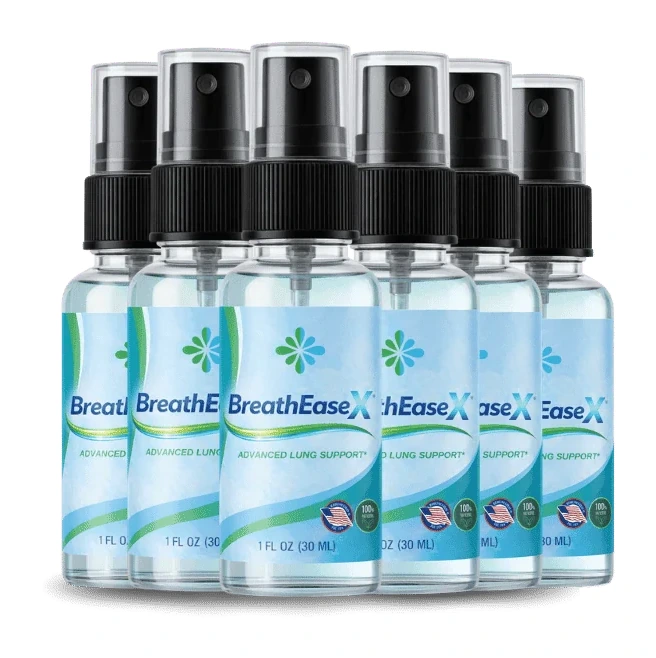
See how Breathe Ease X combines these herbs
A soother, a clearer and an anti-inflammatory in one daily oral spray — with every ingredient and its evidence laid out.
Order Now