Respiratory Health Supplements: 2026 Buyer Guide
Quick Answer: How Do I Choose Respiratory Health Supplements?
Choose respiratory health supplements by reading the label, not the marketing. Favour standardized extracts, transparent milligram doses and third-party testing over proprietary blends. The most-cited 2026 ingredients are NAC, pine bark, elderberry, mullein and cordyceps. Buy for everyday airway comfort, judge results over four to eight weeks, and never treat a supplement as a substitute for prescribed medication.
- Read the panel: named standardized extracts and real mg beat a hidden "proprietary blend."
- Know the classes: soothing herbs, protective antioxidants and supporting vitamins each do a different job.
- Verify the maker: GMP-certified facility, third-party testing, honest support-not-cure claims.
Why respiratory health supplements are so hard to shop for
Shopping for respiratory health supplements in 2026 is genuinely confusing, and it is not your fault. Nearly nine hundred people a month search that exact phrase, another few hundred look for a "respiratory support supplement," and what they meet is a wall of near-identical bottles making near-identical promises. The labels blur together. One shouts about mullein, the next about NAC, a third about a "proprietary respiratory complex" that lists ten herbs and tells you the dose of none of them. Somewhere in that noise there are a few genuinely good products and a great many that are mostly filler and marketing.
This guide is a filter. Instead of ranking brands that will have changed by next quarter, it teaches you the two skills that outlast any list: understanding the ingredient classes so you know what a supplement is even trying to do, and reading a label so you can tell a clinically-studied dose from a sprinkle. Get those two right and you can walk into any store, or any checkout page, and judge a respiratory supplement for yourself.
The three ingredient classes in respiratory health supplements
Almost everything in a respiratory formula belongs to one of three families, and each does a fundamentally different job. A good product usually draws from more than one; a weak one loads up on the cheapest single class and calls it a day.
Soothing and clearing herbs
This is the traditional heart of respiratory support. Demulcent herbs such as mullein and marshmallow root are rich in mucilage that coats and calms the airway lining, while expectorant herbs such as thyme help loosen and move mucus. Mullein in particular carries saponins and mucilage that make it the most common headliner in 2026 formulas. These herbs are about comfort and clearance — how the airway feels and how easily mucus moves — and they have the longest track record, even where modern trials are thin.
Protective antioxidants
The airway takes constant oxidative hits from pollution, smoke, allergens and ordinary metabolism, and this class helps steady the response. NAC (N-acetylcysteine) is the most-cited example, valued for its role in the body's own antioxidant pathways and its traditional association with mucus. Pine bark extract, quercetin and elderberry sit here too, each contributing flavonoids or polyphenols that help calm how sensitive airways react to irritants. Antioxidants are the "protection and resilience" leg of the stool.
Supporting vitamins and adaptogens
Finally there are the foundational nutrients and whole-body supporters. Vitamin D is strongly associated with respiratory wellness, vitamin C is a classic antioxidant cofactor, and adaptogenic mushrooms like cordyceps sit at the edge of this group, studied for oxygen use and endurance rather than the airway surface itself. These are less about the lungs specifically and more about the terrain the lungs operate in. For a closer look at one of them, our piece on vitamin D and respiratory wellness covers the association in detail.

How to read a respiratory supplement label
This is the single most valuable skill in the whole guide, so slow down here. A supplement label is a legal document dressed up as marketing, and once you know where to look, it tells you almost everything.
- Look for standardized extracts. "Pine bark extract, standardized to 95% proanthocyanidins" tells you the active fraction is controlled. "Pine bark powder" tells you nothing about potency. Standardization is how you know two bottles actually contain comparable amounts of what matters.
- Demand real milligram amounts. Every ingredient should show a dose. If the panel hides everything inside a "proprietary blend" with only a single combined weight, you cannot tell whether the star ingredient is a clinical dose or a fairy dusting behind a cheap filler.
- Compare the dose to the research. A number on the label means nothing until you check it against what studies used. Many products list a respected ingredient at a fraction of the studied amount so they can print the name without paying for the dose.
- Check for third-party testing. Independent testing (NSF, USP, or a published certificate of analysis) verifies identity, potency and the absence of contaminants. It is the difference between the maker's word and an outside check.
- Read the claims critically. Honest labels talk about support, comfort and maintenance. Any product promising to cure asthma, reverse lung damage, or work overnight is telling you to stop trusting it.
Run those five checks and most of the shelf disqualifies itself. The proprietary-blend products drop out first, then the ones with token doses, then the ones making disease claims. What survives is a short list of transparent, sensibly dosed, honestly marketed formulas — which is exactly where you want to be shopping.
Want a formula that passes every label check?
Breathe Ease X lays out its mullein-and-cordyceps formula ingredient by ingredient — no proprietary-blend mystery, made in a GMP-certified facility, with an honest money-back guarantee.
See the Full LabelThe most-cited respiratory ingredients of 2026
If you want a shortlist of names worth their place on a label this year, these five come up again and again in credible discussion. None is a cure; each earns its spot for a real reason.
| Ingredient | Class | Why it is cited |
|---|---|---|
| NAC | Antioxidant | Supports the body's own antioxidant pathways; traditional mucus association |
| Pine bark extract | Antioxidant | Proanthocyanidins that help calm airway response to irritants |
| Elderberry | Antioxidant | Flavonoid-rich; popular for seasonal immune and respiratory support |
| Mullein | Soothing herb | Saponins and mucilage soothe the airway lining and support mucus movement |
| Cordyceps | Adaptogen | Beta-glucans studied for oxygen use and endurance |
Notice the pattern: a strong formula pulls from more than one class — a soothing herb, a protective antioxidant, an oxygen-use supporter — rather than five copies of the same idea. That is also why an all-in-one can make sense: it covers several jobs from one bottle at one consistent daily dose.
Are respiratory supplements worth it? A quick myth check
Two objections come up constantly, and both deserve a straight answer. The first is that supplements are a waste of money. Sometimes they are — when you buy token doses, proprietary blends, or disease-claim products. But a well-chosen formula bought for the right reason is not a waste; it is inexpensive everyday support, and the value shows up as consistent airway comfort over weeks. The mistake is expecting a cure and then feeling cheated when you get support, which is all a supplement was ever able to offer. If you want the fuller cost-versus-benefit breakdown, our best lung health supplements guide compares formats and price tiers.
The second objection is safety alongside medication, especially inhalers. This one is not a myth to bust but a rule to respect: never assume compatibility. Herbal and antioxidant supplements can interact with prescription drugs, and no supplement replaces a prescribed inhaler or controller. If you manage asthma or COPD, the label goes to your doctor or pharmacist before it goes in your mouth.
Format matters more than most buyers think
Two products can share an identical ingredient list and still perform differently, because delivery format changes how much of an ingredient your body actually meets and how likely you are to take it every day. Capsules are familiar and stable, but they route everything through digestion, and adherence quietly suffers when a routine means swallowing several pills. Powders let you scale the dose and are cost-effective, though taste and daily measuring put a lot of people off after the first tub. Oral sprays trade some raw dose flexibility for two real advantages: they are effortless to take — a few pumps, no water, no pill — and that ease is precisely what drives the consistency respiratory support depends on. The best format, in practice, is the one you will still be using in week eight, because a brilliant formula abandoned after ten days does nothing at all.
Four buying mistakes to avoid
Even careful shoppers fall into the same traps. Sidestep these four and you have avoided most of the ways people waste money on respiratory health supplements.
- Buying the longest ingredient list. A panel with twenty botanicals looks impressive and usually means each is present in a token amount. More names is not more herb; depth beats breadth.
- Trusting star ratings over the label. Reviews are gameable and volatile. Let the ingredient panel and testing do the deciding, and use reviews only as a tiebreaker between two products that already pass on paper.
- Chasing the biggest single dose. A megadose you take twice then forget loses to a sensible dose you take daily for two months. Judge for the routine you will actually keep.
- Believing the cure claims. The fastest way to spot a product to skip is language promising to reverse, cure or fix a lung condition. Honest respiratory supplements offer support and comfort, full stop.
Where Breathe Ease X fits
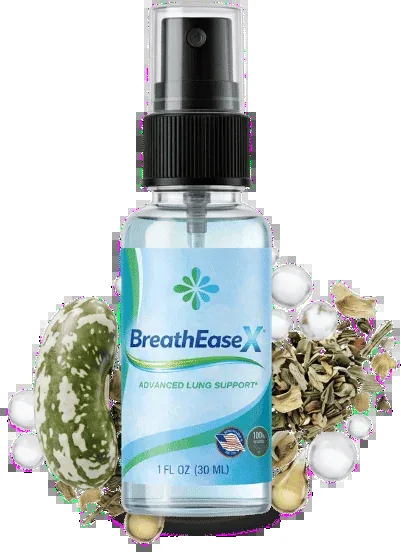
Held up against everything above, Breathe Ease X is built to survive the label test. It is an all-in-one respiratory formula centred on mullein and cordyceps — a soothing herb paired with an oxygen-use adaptogen, the two-class logic a good product should follow. It lists its ingredients openly instead of hiding behind a proprietary blend, it is made in a GMP-certified facility, and it is marketed as daily support rather than a cure. Delivered as an oral spray, it slots easily into the consistent four-to-eight-week routine that respiratory support actually requires. It is not the only honest option on the market, but it is a clear example of what one looks like when you shop from the label out.
Medical note: this article is general information, not medical advice. Speak to a healthcare professional before starting any supplement, especially if you are pregnant, nursing, taking medication, or managing asthma or COPD.
What should I look for in a respiratory health supplement?
Look for standardized extracts named on the label, a full ingredient panel with actual milligram amounts rather than a hidden proprietary blend, and third-party testing where offered. Match the doses against what studies actually used, favour manufacturing in a GMP-certified facility, and walk away from any product that promises to cure disease or deliver overnight results.
Are respiratory supplements worth the money?
They can be, if you buy well and expect the right thing. A quality respiratory supplement is everyday comfort and maintenance support, not a medicine, so the value is in consistent airway comfort over weeks rather than a cure. The money is wasted when you buy token doses, proprietary blends, or products making disease claims. Buy for support, judge over four to eight weeks.
Which respiratory supplement has the best reviews in 2026?
Reviews shift constantly and are easy to fake, so weigh them alongside the label rather than instead of it. In 2026 the most-cited respiratory ingredients are NAC, pine bark, elderberry, mullein and cordyceps, and well-reviewed all-in-one formulas tend to combine several of these at transparent doses. Breathe Ease X is one mullein-and-cordyceps formula that lists its ingredients openly; check current reviews against its panel before you buy.
Can I take respiratory supplements with my prescription inhaler?
Do not assume so — check first. Herbal and antioxidant supplements can interact with prescription medication, and a supplement is never a replacement for a prescribed inhaler or controller. If you use an inhaler or manage asthma or COPD, show the full supplement label to your doctor or pharmacist and let them confirm it is safe alongside your treatment before you start.
Scientific references
Shop respiratory support from the label out
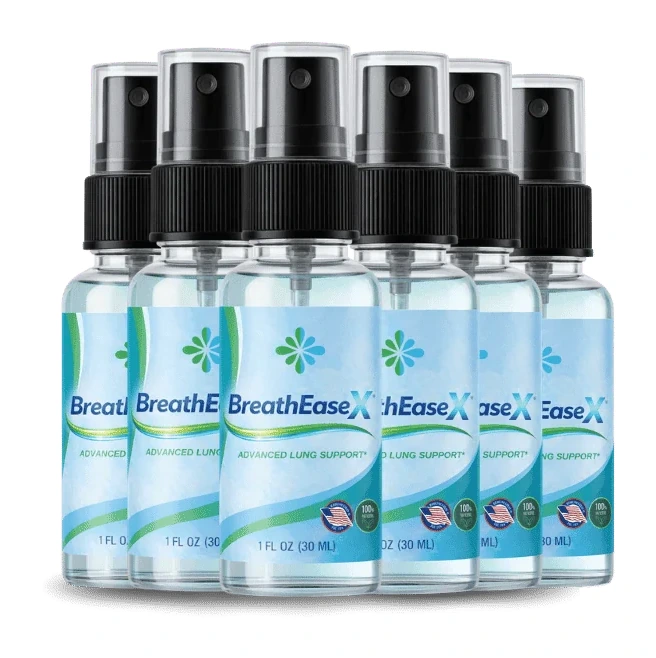
Breathe Ease X combines mullein and cordyceps in one transparent, daily oral spray — the two-class logic a good respiratory supplement should follow.
Order Now